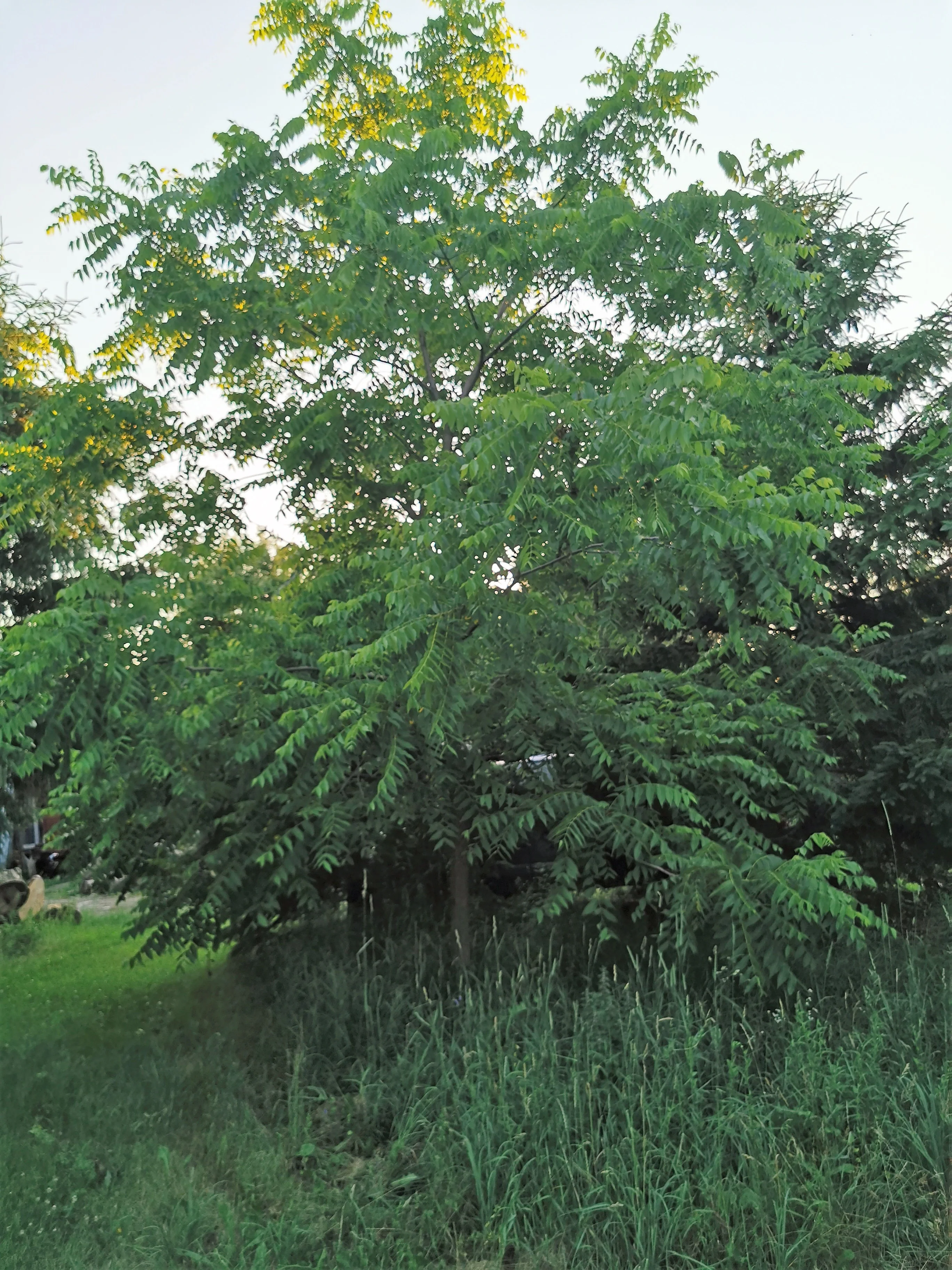
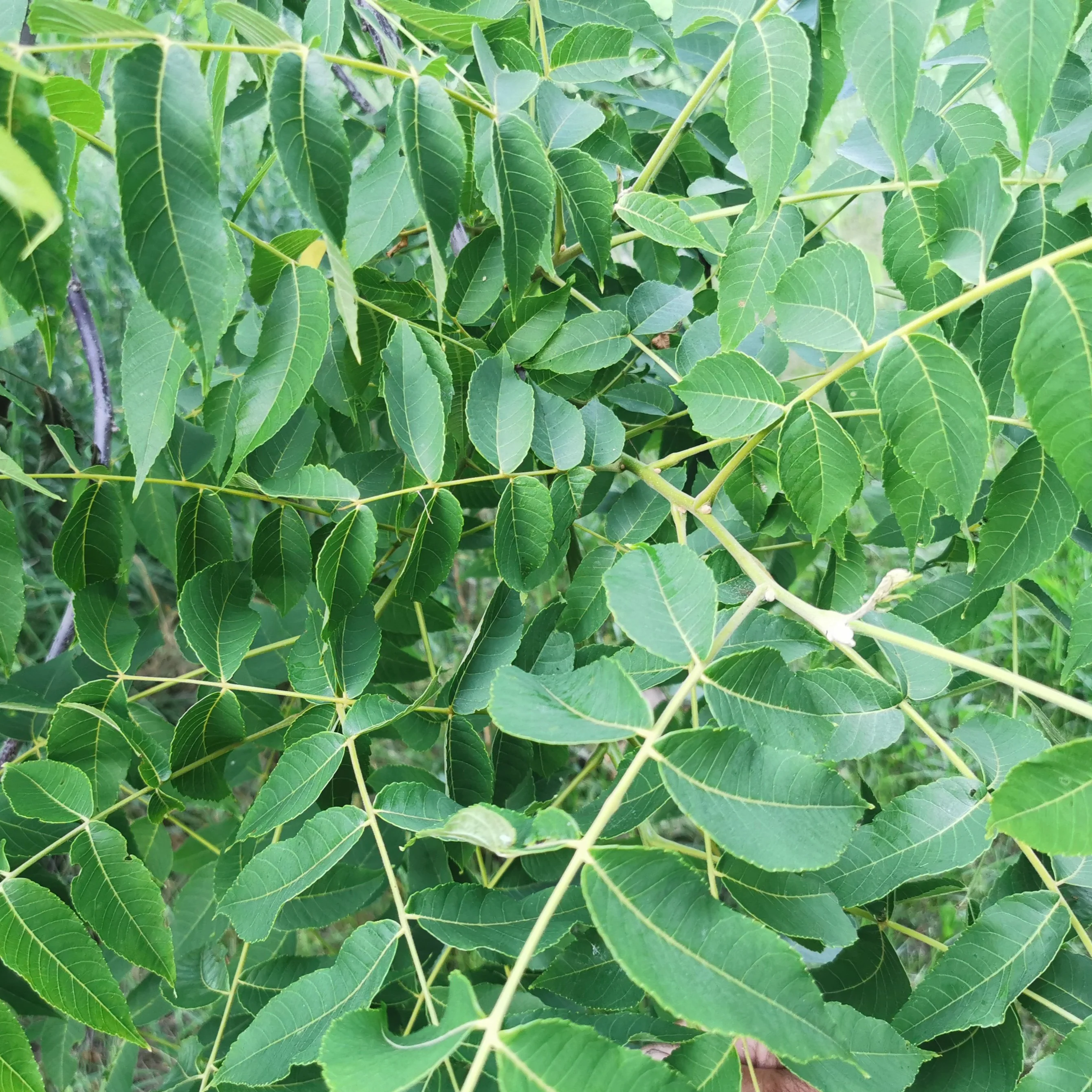
Black Walnut Seedling Bareroot
Species: Juglans nigra or hybrid. Our seeds are collected from trees that may have been cross-pollinated by closely related species so the resulting seedlings may be hybrids.
History: Native to much of the eastern and central United States and southern Ontario, Black Walnut has long been used as a source of food, dye, lovely dark wood, and as an ornamental tree. Although it is said to have a better flavour than the English walnut, the Black walnut remains less popular due to the increased difficulty of harvesting the nut meat from within the husk. Black walnut is also infamous for being allelopathic, meaning it secretes toxic chemicals (juglones) into the soil to reduce plant competition.
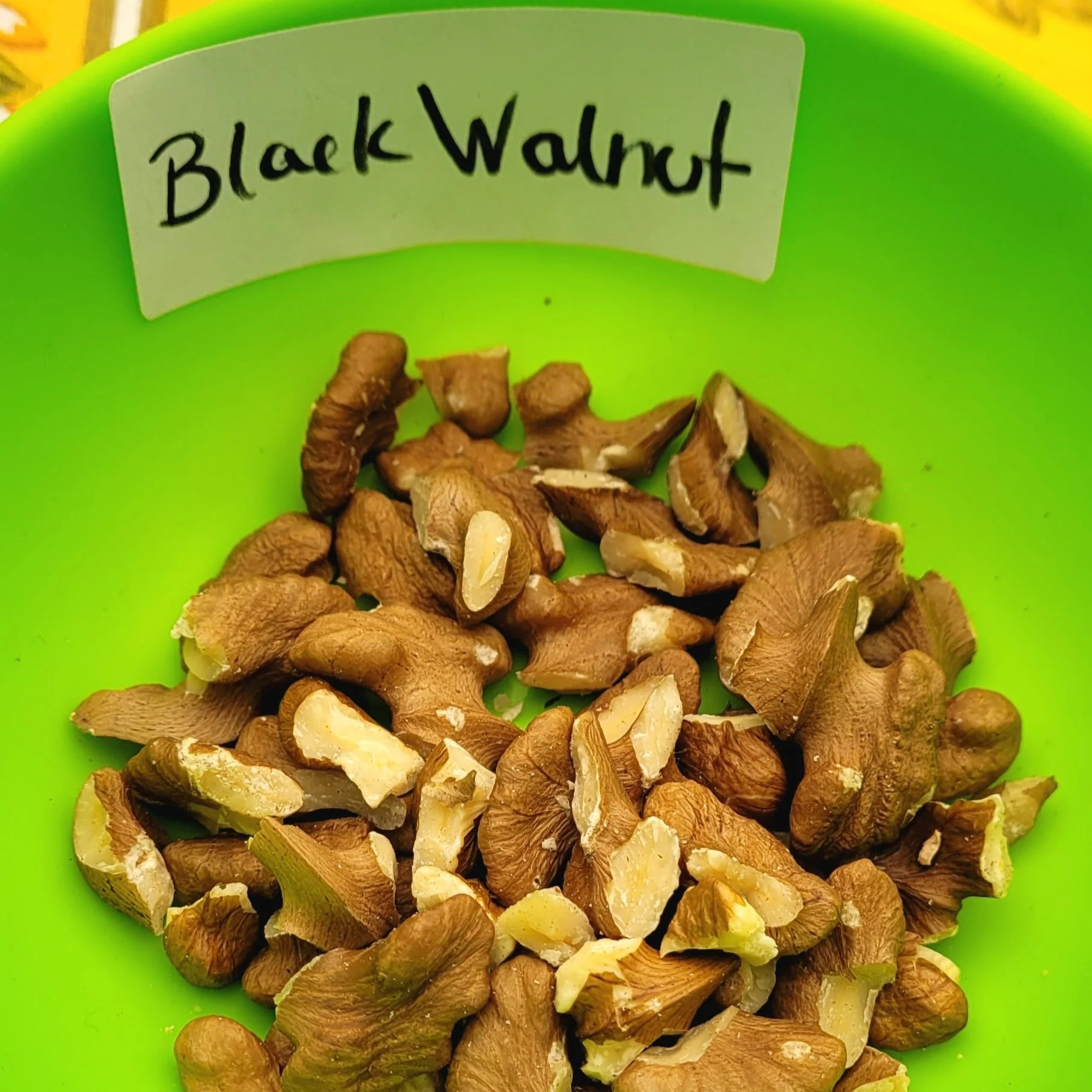
Why We Grow It: Black walnut is a beautiful tree that produces nuts with a stronger flavour than that of English walnuts. The sap can be boiled to make walnut syrup, which tastes very similar to maple syrup but with notes of caramel and butterscotch. Also, the husks can be used in brewing beer!
Be mindful of the juglones in the in the roots/nut husks, they are toxic to many other species. They require a buffer of about 50'/30m from the edge of the trees canopy for juglone-sensitive plants. This article from The Garden Hoe has a helpful list of plants that tolerate juglones. However there are recent (2019) studies showing healthy soil high in organic matter and mycorrhizal fungi actually reduce the toxicity of juglones suggesting many plants can grow below juglans species in a healthy ecosystem - it will be interesting to see more study done in this area!
More Images
Black Walnut Seedling Bareroot
Species: Juglans nigra or hybrid. Our seeds are collected from trees that may have been cross-pollinated by closely related species so the resulting seedlings may be hybrids.
History: Native to much of the eastern and central United States and southern Ontario, Black Walnut has long been used as a source of food, dye, lovely dark wood, and as an ornamental tree. Although it is said to have a better flavour than the English walnut, the Black walnut remains less popular due to the increased difficulty of harvesting the nut meat from within the husk. Black walnut is also infamous for being allelopathic, meaning it secretes toxic chemicals (juglones) into the soil to reduce plant competition.
Why We Grow It: Black walnut is a beautiful tree that produces nuts with a stronger flavour than that of English walnuts. The sap can be boiled to make walnut syrup, which tastes very similar to maple syrup but with notes of caramel and butterscotch. Also, the husks can be used in brewing beer!
Be mindful of the juglones in the in the roots/nut husks, they are toxic to many other species. They require a buffer of about 50'/30m from the edge of the trees canopy for juglone-sensitive plants. This article from The Garden Hoe has a helpful list of plants that tolerate juglones. However there are recent (2019) studies showing healthy soil high in organic matter and mycorrhizal fungi actually reduce the toxicity of juglones suggesting many plants can grow below juglans species in a healthy ecosystem - it will be interesting to see more study done in this area!
Product Information
Product Information
Shipping & Returns
Shipping & Returns
Description
Species: Juglans nigra or hybrid. Our seeds are collected from trees that may have been cross-pollinated by closely related species so the resulting seedlings may be hybrids.
History: Native to much of the eastern and central United States and southern Ontario, Black Walnut has long been used as a source of food, dye, lovely dark wood, and as an ornamental tree. Although it is said to have a better flavour than the English walnut, the Black walnut remains less popular due to the increased difficulty of harvesting the nut meat from within the husk. Black walnut is also infamous for being allelopathic, meaning it secretes toxic chemicals (juglones) into the soil to reduce plant competition.
Why We Grow It: Black walnut is a beautiful tree that produces nuts with a stronger flavour than that of English walnuts. The sap can be boiled to make walnut syrup, which tastes very similar to maple syrup but with notes of caramel and butterscotch. Also, the husks can be used in brewing beer!
Be mindful of the juglones in the in the roots/nut husks, they are toxic to many other species. They require a buffer of about 50'/30m from the edge of the trees canopy for juglone-sensitive plants. This article from The Garden Hoe has a helpful list of plants that tolerate juglones. However there are recent (2019) studies showing healthy soil high in organic matter and mycorrhizal fungi actually reduce the toxicity of juglones suggesting many plants can grow below juglans species in a healthy ecosystem - it will be interesting to see more study done in this area!